
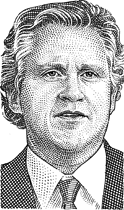
Very few executives have taken the step to cut their own bonuses when stockholder make big losses. Reading the national mood and the outcry over Wall Street bonus payments when the bank are bailed out by taxpayers, Jeffrey Immelt demonstrated leadership by refusing a bonus for 2008. General Electric Co. Chairman and CEO Jeffrey Immelt… More »
My Notes — Teaching

November 26, 2008 · Management Teaching
Radical Rethinking of Cash Management
The Economist summarizes the profound implications of the financial crisis for the management of cash in firms.
SELDOM has corporate strategy been turned on its head so quickly. Barely a year ago, cash was a dangerous thing to accumulate: activist investors stalked companies, urging boards to return it to investors, to pay special dividends or to buy back shares. Ever since the 1980s the fashion had been to make companies as lean as possible, outsourcing all but your core competencies, expanding your just-in-time supplier system around the globe, loading up with debt to “leverage” your balance-sheet. Old-style defensive conglomerates, such as Arnold Weinstock’s General Electric Company, were dismantled. Companies that hoarded cash—even ones as good as Toyota and Microsoft—were viewed with suspicion.

Short History of Modern Finance
In it's appraisal about the current state of capitalism (Capitalism at Bay) the Economists gives a useful summary of want went wrong. Without doubt, modern finance has been found seriously wanting. Some banks seemed to assume that markets would be constantly liquid. Risky behaviour garnered huge rewards; caution was punished. Even the best bankers took… More »

October 2, 2008 · Uncategorized Teaching
THE RECKONING: As Credit Crisis Spiraled, Alarm Led to Action
Background:The NY Times reports on the what triggered Paulson and Bernacke to seek an immediate 700 billion fund to prevent the American markets from collapsing. Read full story on NYTimes.com.

Risk will always equal potential reward
Greed, as it periodically does when traders and bankers forget the lessons of the past, clouded judgments. Some very smart people talked themselves into believing in the repeal of one of the fundamental laws of economics: risk will always equal potential reward. The idea that risk can be eliminated and high yields guaranteed is as… More »
September 19, 2008 · Uncategorized Teaching
The F.A.Q.?s of Lehman and A.I.G.
Doug Diamond and Anil Kashyap of the University of Chicago explain the recent financial crisis. For most of the last 20 years we have been studying banks, monetary policy, and financial crises. So for us the events of the last year have been especially fascinating.The last 10 days have been the most remarkable period of… More »

Management Wisdom Courtesy of Jeff Pfefer
Jeff Pfeffer has spent the past twenty years figuring out what management ideas have some systematic data behind them and what ideas are make for a good story but are simply wrong. Guy Kawasaki (who wrote a fantastic little book on entreprepreurship, The Art of the Start, which I am using in one of my… More »

What Don Quixote Can Teach Managers and Entrepreneurs
Miguel de Cervantes. 2003. Don Quixote. HarperCollins Publishers, New York. Translated by Edith Grossman.
When I first encountered Don Quixote, I thought that a manager or entrepreneur could not possibly learn anything from this lunatic Spaniard. But on reflection I realized that Don Quixote provides some valuable insights into leadership and the challenge of dealing emotionally with the uncertainties inherent in any new venture. Let me briefly summarize the book:

Taming Your Inner Homer Simpson
My Kellogg students will remember that I asked them to rate their intelligence vis-a-vis the average member of the class. I routinely had 75 percent of all student who rate themselves above average. That is 25% too many. A colleague of mine warned me that 90% academics feel undervalued by their institution. But until now… More »
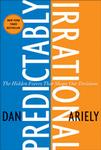
The Latest Reasoning about our Irrational Ways
Elizabeth Kolbert reviews in the New Yorker the latest on findings on how people behave in irrational ways when making economic decisions. Read her Reviews of two new books.
“Predictably Irrational: The Hidden Forces That Shape Our Decisions” (Harper; $25.95); by Ariely, Dan;
“Nudge: Improving Decisions About Health, Wealth, and Happiness” (Yale; $25); by Thaler, Richard H.