
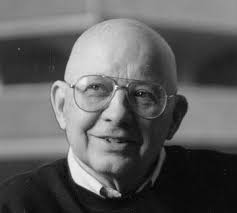
Peter Ping Lee interviews James March. I provide here what I personally found the most interesting part of the full interview. Peter: In your MOR 2005 article (March 2005), you referred to the peripheral position of the indigenous research communities relative to the mainstream research community. Do you think the Chinese research community is like… More »
My Notes — Methodology

Using Simulation Experiments to Test Historical Explanations
I wanted to test with a computer simulation the explanations I offered in my book Knowledge and Competitive Advantage: The Coevolution of Firms, Technology and National Institutions for why German firms overtook their French and British competitors in the Synthetic Dye Industry from 1857-1913. So I partnered with Thomas Brenner who has created a simulation… More »

March 22, 2014 · Methodology Research
Another Great Example of Serendipity in Scientific Discovery
People underestimate that scientists often make progress by chance. Here is the story of researchers studying a species that has invaded Florida’s Everglades made an unanticipated discovery: deadly Florida pythons have internal GPS. “We found that Burmese pythons have navigational map and compass senses,” said Shannon Pitman of North Carolina’s Davidson College, the lead researcher… More »

February 11, 2014 · Methodology Research
Improving Your Case Method Skills: Two Methodological Pieces by Michael Scriven
The philosopher and polymath Michael Scriven has written extensively on the logic of explanations. Here are two of his most valuable pieces. The first one is how one can make good inferences from single case studies and the second one one explanations in history. 1. Scriven, M. (1974). Maximizing the Power of Causal Investigations: The… More »

October 5, 2013 · Methodology Research
Excerpts from Arthur Stinchcombe’s on “Theoretical Methods in Social History”
Ten years ago I read Stinchcombe’s “Theoretical Methods in Social History”. I recently reread the parts that I had highlighted and I thought it useful to share some key passages.[1]
One does not apply theory to history; rather ones uses history to develop theory. [2]
—-
It is rather that the fashion in quantitative history has come to be that one must agree to be voluntarily ignorant of the any evidence other than numbers. [3]As the argument develops, it will become clear why I am unenthusiastic about most quantitative history. Let me state the argument in capsule form.
For a number, say a count, to be theoretically interesting, it has to be a count of a comparable instance. What instances comparable for a scientist is that those instances have identical causal impact. Thus a count is more illuminating, the more theory and the more detailed examination of the facts went into making the instances counted comparable. But this ordinarily means that making a count should be the last stage of a scientific enterprise, a stage reached only after an extensive development of theory on what makes instances comparable. Is the proletarian in the Vyborg district of Petersburg or in the Baltic Sea Fleet equivalent in impact on the Russian Revolution to a proletarian in Moscow? Trotsky convinces me he was not (and if the proletarian was a she, in either place, she was not equivalent to a male proletarian either). Consequently, a count of proletarians in Russia in 1917 is fact of relatively little interest. [4]

AOM 2013: Two workshops I am participating in: History and Design Evolution
History and Strategy: Toward an Integration of Theory and Method History and Strategy
[color=red]New Presentation Slides for Download. [/color]Click here.
Program Session #: 80 | Submission: 14401 | Sponsor(s): (BPS, MH, TIM)
Scheduled: Friday, Aug 9 2013 11:45AM – 1:45PM at WDW Swan Resort in Swan 10
Organizer: Steven Kahl; Dartmouth College (TUCK);
Organizer: Brian S. Silverman; U. of Toronto;
Participant: David A. Kirsch; U. of Maryland;
Participant: Huseyin Leblebici; U. of Illinois;
Participant: J Peter Murmann; Australian School of Business, UNSW;
While historical research has played a central role in the development of the strategy literature, it remains underrepresented in strategy journals. This PDW explores how historical analysis can inform strategy research. As the strategy field continues to develop dynamic models of strategy, the historical perspective can provide unique perspective, and could potentially even develop a history-based theory of strategy. Yet, doing historical research in strategy faces methodological challenges given its different approach to the development of theory and use of evidence. Consequently, this PDW addresses the different opportunities available to strategy scholars to engage in the historical method. The format of the PDW is a combination of 1) presentations in which scholars experienced in conducting historical analysis within the strategy and organizational fields discuss the challenges of doing this work and 2) interactive breakout sessions in which participants break into smaller groups to discuss design of a historical study in topical strategy research areas, such as dynamic capabilities and industry evolution. These breakout sessions will help identify how the historical approach can make novel theoretical contributions and reveal roadmaps for pushing this work further.
Search Terms: History/Historical Analysis , Strategy , Theory and Methods
Architectural Strategy and Design Evolution in Business Ecosystems: Opportunities and Challenges
Ecosystem Design and Strategy
Program Session #: 279 | Submission: 10331 | Sponsor(s): (TIM, BPS, ENT, OMT)
Scheduled: Saturday, Aug 10 2013 10:15AM – 12:45PM at WDW Swan Resort in Swan 3

Touchstones: Examples of Excellent Papers
Empirical Papers
Here are examples of excellent papers that I encourage people to use as touchstones and imitate when written small-n or case study papers.
Danneels, E. (2011). “Trying to become a different type of company: dynamic capability at Smith Corona.” Strategic Management Journal 32(1): 1-31.
Mirabeau, L., & Maguire, S. (2014). From autonomous strategic behavior to emergent strategy. Strategic Management Journal, 35(8): 1202-1229.
Miller, R., M. Hobday, T. Leroux-Demers and X. Olleros (1995). “Innovation in Complex System Industries: the Case of Flight Simulation.” Industrial and Corporate Change 4(2): 363-400.
Murmann, J. P. (2013). “The Coevolution of Industries and Important Features of their Environments.” Organization Science 24(1): 58-78.
Siggelkow, N. (2002). “Evolution toward Fit.” Administrative Science Quarterly 47(1): 125-159.
On Method
Here are some methodological texts that I found particularly useful in helping me refine my case study design skills.

Lack of Replication in Management Studies
Tim Devinney and Donald Siegel write in their recent editorial of the Academy of Management Perspective (Feb 2012, Vol. 26 Issue 1, p 6-11): Hubbard and Vetter (1996) estimated that fewer than 5% of management studies are subject to any published form of replication, and when this occurs it invariably refutes the initial research. (p.7)… More »
May 29, 2012 · Methodology Research
Herb Simon on Numbers in Social Sciences
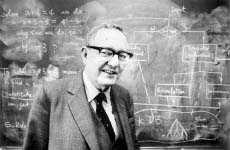
In Herb Simon's obituary, the Pittsburgh Post-Gazette reports: He had hoped to use mathematics to give the social sciences the same rigor as such hard sciences as physics and chemistry, but found that a frustrating experience; even with the new machine called a computer that was available at Carnegie Tech, it seemed that something was… More »

List of firms how superior performance cannot be explained by randomness
Andy Henderson and his coauthors have done us a great service. They are analyzed last decades to find a list of firms whose superior performance cannot be explained by randomness.
Although sustained superior firm performance may arise from skillful management or other valuable, rare, and inimitable resources, it can also result from randomness. Studying U.S. companies from 1965–2008, we benchmark how long a firm must perform at a high level to be confident that it is something other than the outcome of a time-homogeneous stationary Markov chain defined on the state space of percentiles. We find (a) the number of sustained superior performers in Compustat, measured by ROA and Tobin’s q, exceeds the number of false positives we would expect to be generated by such a process; yet (b) the occurrence of false positives is often enough to fool many observers, so (c) the identification of sustained superior performers requires particularly stringent benchmarks to enable valid study.
Read Full Article
Click on More to see the list of firms.