
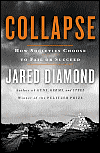
The author of Guns, Germs, and Steel considers why some societies collapse when faced with environmental or political catastrophe, while others soldier on. Malcom Galdwell has published a useful review of the book in the New Yorker .
My Notes

December 22, 2004 · Psychology Teaching
Experience Gestalt Pictures
My former student John Tsau forwarded me some other examples of pictures that can be seen in different ways. What we can see is to a large extent conditioned what we expect to see in the world in the first place…

November 20, 2004 · Psychology Research
Personality Plus: Employers love personality tests. But what do they really reveal?
A hefty percentage of American corporations use personality tests as part of the hiring and promotion process. The tests figure in custody battles and in sentencing and parole decisions. "Yet despite their prevalence-and the importance of the matters they are called upon to decide-personality tests have received surprisingly little scrutiny," Paul writes. We can call… More »

The Construction of Social Reality
John Searle's book is a must-read for every social scientist. Searle makes the important distinction between observer independent facts (the sun exists independently of any human being observing it) and oberserver dependent facts (money does not exist unless people agree that a sheet of paper is worth a particular amount). This distinction, in my view,… More »
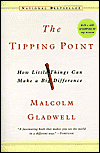
The Tipping Point
Defining that precise moment when a trend becomes a trend, Malcolm Gladwell probes the surface of everyday occurrences to reveal some surprising dynamics behind explosive social changes. He examines the power of word-of-mouth and explores how very small changes can directly affect popularity. Perceptive and imaginative, The Tipping Point is a groundbreaking book destined to… More »

June 19, 2004 · Conferences Research
Adaptation vs. Selection in Industry Change: Toward a Contingency View
Important Workshop at AOM ’04: Participate in the workshop on Adaptation vs. Selection in Industry Change organized by Jan Rivkin and myself. Panelists are: Bill Barnett, Clayton Christensen, Anita McGahan and Will Mitchell.

May 16, 2004 · Uncategorized Research
Economist Paul Romer on Innovation, Instutitions and Economics growth
Paul Romer gave an interesting interview in Reason Magazine describing in non-technical terms on how ecnomic growth comes about.

Evolutionary Economics — The State of the Science
This is a talk I gave at a conference New Perspectives on Telecommunications and Pharmaceuticals in Europe and the United States: Conference on Evolutionary Economics:
Conference Program
Good morning. Let me give you a quick road map of my presentation. First, I will discuss where we are in terms of evolutionary economics, beginning with Nelson and Winter, 1982, the key book in this literature. Then I’ll provide a quick review of the ideas behind evolutionary accounts, laying out the requirements for a valid evolutionary explanation. I’ll follow this with a discussion of recent trends in the literature over the last six or seven years, addressing what I believe to be some of the key outstanding issues that should be addressed by the evolutionary perspective. Finally, time-permitting I’ll speculate a little bit about how one can make economics more an evolutionary science, and about what can be done to make evolutionary ideas more accepted.