
My Notes — Economics

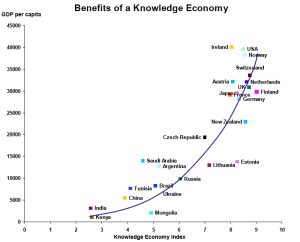
Benefits of the Knwoledge Economy
Figure 1 from the ETH Strategy Report: Knowledge is the main engine of economic growth. A strong correlation can be observed between the Knowledge Economy Index (KEI) and GDP per capita. The KEI is calculated by the World Bank and is based on the four pillars of the Knowledge Economy framework: 1. An economic and institutional regime to provide incentives for the efficient use of existing and new knowledge and the flourishing of entrepreneurship; 2. An
educated and skilled population to create, share, and use knowledge well. Click on More to see a powerful picture.
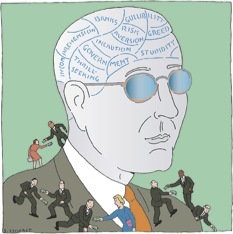
Three Books on the Origins of the Financial Crisis and its Lessons
John Lanchester reviews three books on the origins of the financial crisis and its lessons in the New Yorker. Two of them are useful for the general reader. Gillian Tett, “Fool’s Gold” (Free Press) Richard A. Posner, “A Failure of Capitalism” (Harvard) I personally personally found Fools Gold the most rewarding of all the books… More »
Economics: Is the discipline in crisis?
Drake Bennett of the Boston Globe is reporting on the soul searching that is going on the field of economics and finance after the professions inability to foresee the crisis. THE DEEPENING ECONOMIC downturn has been hard on a lot of people, but it has been hard in a particular way for economists. For most… More »

Short History of Modern Finance
In it's appraisal about the current state of capitalism (Capitalism at Bay) the Economists gives a useful summary of want went wrong. Without doubt, modern finance has been found seriously wanting. Some banks seemed to assume that markets would be constantly liquid. Risky behaviour garnered huge rewards; caution was punished. Even the best bankers took… More »

Paulson on the diversity of firm in the financial industry
Trying to imitate high-status Newtonian physics, management scholars over the past fifty hear have tried to formulate general laws about the behavior of organizations. In his statement after the passing of the $700 billion bailout of the financial industry, Paulson in my view correctly emphasized that the salient fact about most industries is the diversity and not the sameness of firms within them.

Risk will always equal potential reward
Greed, as it periodically does when traders and bankers forget the lessons of the past, clouded judgments. Some very smart people talked themselves into believing in the repeal of one of the fundamental laws of economics: risk will always equal potential reward. The idea that risk can be eliminated and high yields guaranteed is as… More »
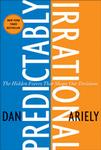
The Latest Reasoning about our Irrational Ways
Elizabeth Kolbert reviews in the New Yorker the latest on findings on how people behave in irrational ways when making economic decisions. Read her Reviews of two new books.
“Predictably Irrational: The Hidden Forces That Shape Our Decisions” (Harper; $25.95); by Ariely, Dan;
“Nudge: Improving Decisions About Health, Wealth, and Happiness” (Yale; $25); by Thaler, Richard H.
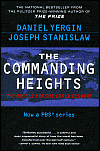
Commanding Heights: The Battle for the World Economy
Rarely have I seen such a powerful documentary about how ideas shape the world. The film traces the ideas that shaped macro-economic policy making over the course of the 20th century. The film will be eye-opening for people who know very little how economic policy powerfully effects the welfare of societies all over the world.… More »
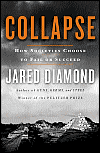
Review of Jared Diamond’s New Book “Collapse”
The author of Guns, Germs, and Steel considers why some societies collapse when faced with environmental or political catastrophe, while others soldier on. Malcom Galdwell has published a useful review of the book in the New Yorker .