
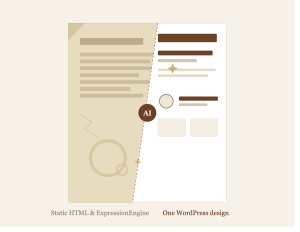
My web presence had grown into a patchwork over nearly twenty years. My main site at professor-murmann.net was a set of hand-built static HTML pages. My books had their own WordPress site. And the bulk of my writing – hundreds of entries across my teaching and research blogs, a curated collection of Charles Tilly’s methodological writings, my CV – lived on professor-murmann.info, which ran on ExpressionEngine, a content-management system I had adopted long ago. Different vintages, different technologies, different looks, and parts of it increasingly insecure: the ExpressionEngine software was no longer maintained and some of the components had known vulnerabilities. I faced the choice many people with aging websites eventually face: pay a professional to rebuild everything, or let it quietly decay.
Instead, I rebuilt it myself, with an AI assistant. Working with Claude over a series of sessions, I had it design one clean, secure, modern theme to unify everything. We gave the existing WordPress books site that new look, then built a fresh WordPress site for my publications at publications.professor-murmann.net. Finally, and this was the hardest part, we ported the old ExpressionEngine blogs into WordPress: the AI read my old database directly, worked out how the original site was organized, and migrated two decades of posts into the new design, images, PDFs and embedded videos included. What a freelance developer might have quoted several thousand dollars and many weeks to do, I did for the cost of a software subscription, in my spare hours, while keeping full control over how every page looked.
As someone who studies how technology reshapes industries, I find my own experience telling. Web design for small clients, whether individuals, academics, small associations or local businesses, has long been a service you had to buy because the technical barrier was real. You either learned to code or you hired someone who had. AI collapses that barrier for a large class of routine jobs. The knowledge that used to be scarce and billable is now available on demand, and the person who understands what the site should say no longer has to depend on someone else to make it work.
I want to be careful not to overstate the point. The AI did not replace judgment. I had to decide how the sites should be structured, what to keep and what to retire, how things should read and feel; and I had to catch the mistakes it made along the way. A genuinely ambitious, bespoke site, with a distinctive visual identity, complex interactions and heavy traffic, still benefits enormously from a skilled designer and developer, and probably will for some time. What has changed is the floor, not the ceiling: the ordinary, repetitive end of the market, where most people’s needs actually sit, no longer requires a specialist.
This is what creative destruction looks like up close. It rarely announces itself as the sudden death of a profession. It arrives as a quiet shift in who can do what, and at what cost, and the firms and individuals who thrive are the ones who move up the value chain toward the work that still demands human taste and judgment, rather than defending the routine work the machine now does for free.
If you have an old website you have been nursing along, or dreading the bill to replace, it is worth knowing that the economics have changed. You may be far more capable of doing it yourself than you were even a year ago.